27,200 reviewsKerið included
7–8.5 hGolden Circle Full-Day Classic
★ 4.8 · 27200 reviews
- 7 to 8.5 hours, Iceland's Golden Circle
- Geysir area, Gullfoss waterfall
- Most booked
- Free cancellation
$86$10.75 / hour
Check availability→ A rift and a geyser
Two of the three Golden Circle sites sit within forty minutes of each other and they could not be less alike. Þingvellir is a rift valley between two continental plates where Icelanders held an open-air parliament from the year 930. Geysir is a field of boiling ground where the geyser that named every geyser on earth has been dormant since 2003 — and the one next to it fires every six to ten minutes.
Quick answer
The short answer. Both are free to enter. Þingvellir parking is 1,000 ISK per car and one payment covers every main car park for the day; Geysir parking is about the same. Allow forty-five minutes at Þingvellir and thirty at Geysir. And do not wait for the Great Geysir — it is asleep. Strokkur is the one that goes off.
Þingvellir
Geology and parliament in the same field, and both of them free to walk into.
You come over a rise on Route 36 and the whole thing opens out at once: a lake, a plain, and a wall of dark rock running away north. The wall is the edge of the North American plate. Several kilometres east across the plain is the edge of the Eurasian one. Everything in between is the gap, and it is getting wider by a couple of centimetres a year.
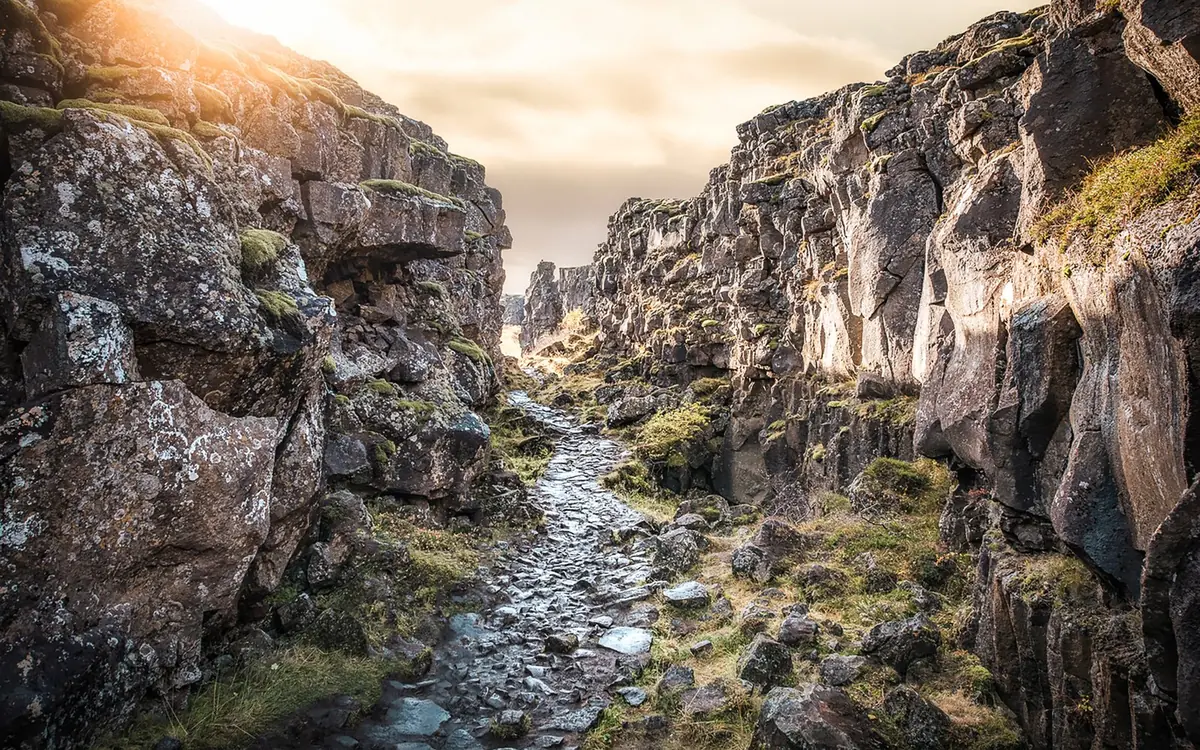
The path most people walk is Almannagjá, a corridor between cliffs that takes you down from the upper car park onto the plain. It is short, it is easy, and it is one of very few places on the planet where the boundary between two tectonic plates is above sea level and you can walk into it.
The other half of the site is human. The Alþingi — the Icelandic assembly — met here in the open from the year 930 and continued on this spot for centuries. There is no building. There is a rock called the Lögberg where the law-speaker stood, a church, and a plain where people camped. Standing in it, the arrangement makes more sense than any museum could.
Geysir
This is the single most common disappointment on the Golden Circle, and it is entirely avoidable if somebody tells you first.
The Great Geysir — Geysir itself, the hot spring that gave the English language the word geyser, and which appears in Icelandic records as far back as 1294 — has been dormant since 2003. At its most active it threw water some seventy metres into the air. It now does nothing. People stand at the rope in front of it and wait.
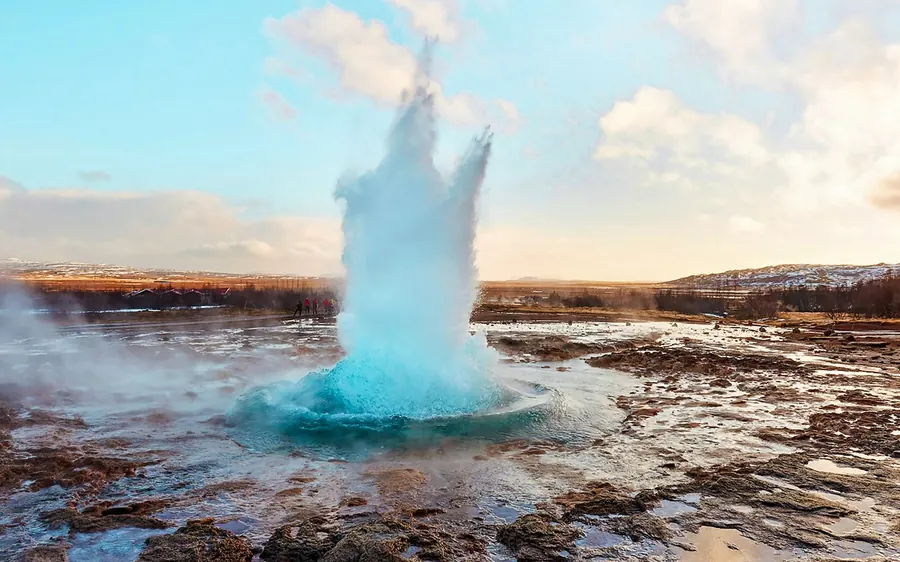
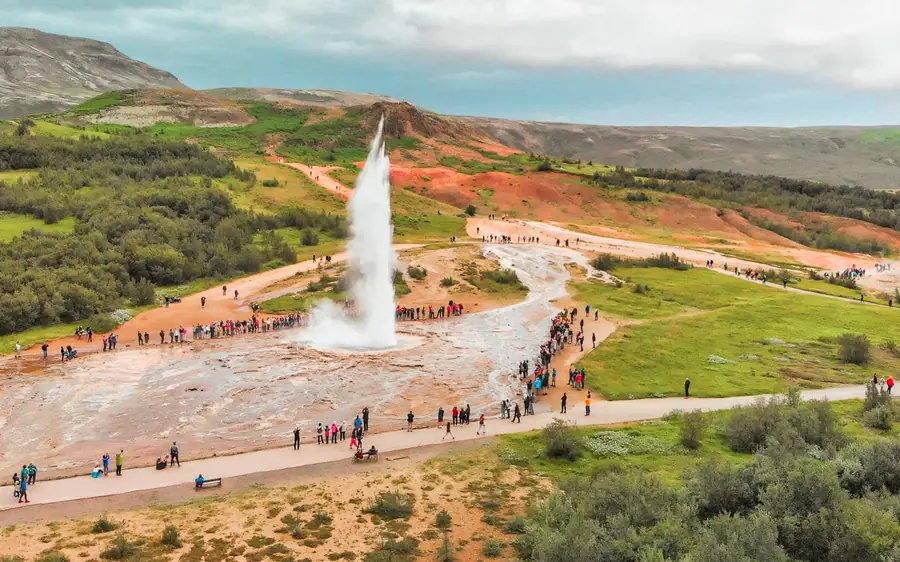
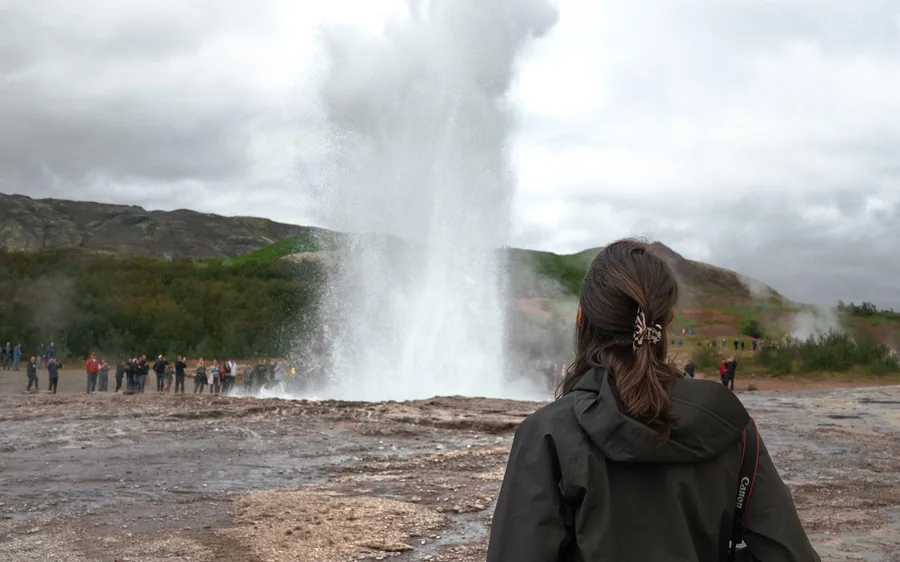
What actually performs is Strokkur, a hundred metres away, and it performs relentlessly: an eruption every six to ten minutes, fifteen to twenty metres high, and occasionally up to forty.
The moment worth waiting for is not the column. It is the second before it, when the pool domes upward into a smooth blue bubble roughly the size of a car and every camera around the rope goes off at once. Stay for three eruptions: the first surprises you, the second you photograph, and the third you actually watch.
Practical
Both are free. These are the details that make the hour better.
1,000 ISK per car, 1,200 ISK for six to nine seats, and one payment is valid at all the main car parks for the whole day. Pay by plate at the machine or online; the cameras do check.
Most people photograph the rift from the upper platform and leave. The path down between the walls takes fifteen minutes and it is the actual experience.
The spray is near-boiling water and it carries. Watch which way the steam is going and put yourself on the other side of the rope.
The ground between the pools is thin crust over very hot water. This is the one genuine hazard on the whole route and it is why the ropes exist.
Twenty to thirty minutes at Geysir is right. There is a café and a large shop, and neither is why you came.
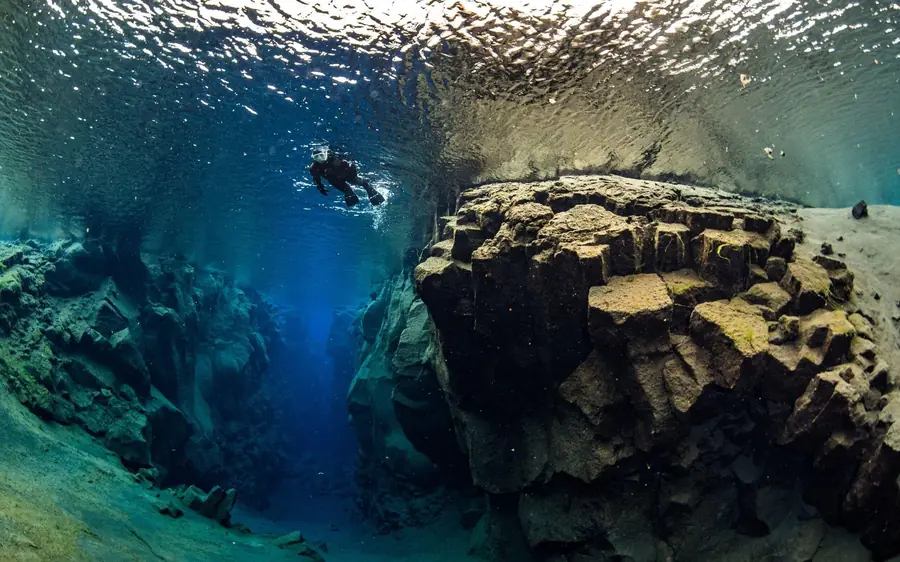
The fissure where you can snorkel between the plates is inside the national park. It is a separate booking and a separate half day, and the visibility is over a hundred metres.
The third stop is twenty minutes on, and it is the one nobody is ready for.
Gullfoss→Book direct
Every Golden Circle tour includes them. Silfra is the separate one, inside Þingvellir.
★ 4.8 · 27200 reviews
★ 4.8 · 937 reviews
★ 4.8 · 801 reviews
★ 4.7 · 205 reviews
Common questions
No. The Great Geysir has been dormant since 2003. The geyser that erupts is Strokkur, about a hundred metres away, which fires every six to ten minutes to fifteen or twenty metres and occasionally to forty.
Every six to ten minutes, all day, every day of the year. Most people stay for two or three eruptions, which takes about twenty minutes.
Entry is free — it is a national park with no ticket. Parking is 1,000 ISK per car for up to five seats and 1,200 ISK for six to nine, and one payment covers all the main car parks for the whole day.
Two things at once. It is the rift where the North American and Eurasian plates are pulling apart, and it is where the Icelandic parliament met in the open air from the year 930. It is a UNESCO World Heritage site for the second of those.
You walk down into the rift between the plate edges along Almannagjá, which is the path from the upper car park. The two plate boundaries are several kilometres apart, so you are in the gap rather than touching both at once.
About forty-five minutes at Þingvellir if you walk down the rift, and thirty at Geysir for two or three eruptions. Together they are the first half of a Golden Circle day.
Go deeper
The three headline sites and the six worth adding, with what each one costs.
GullfossTwo drops, 32 metres, 141 cubic metres a second, and the woman who saved it.
Kerið270 metres across, 55 deep, and the only stop on the route with a gate fee.
Route230 km, which roads, which direction, and every car park with its fee.
ItineraryHour by hour from Reykjavík and back, in the order that misses the coaches.
PricesTwelve tours priced against each other and against driving it yourself.
3-Day Golden Circle & South Coast
★ 4.9 · 646 reviews · Free cancellation 24 h