Cheapest here7 hours
7 hGolden Circle, Crater & Horses
★ 4.9 · 45 reviews
- Seven hours, from Reykjavik in a guided tour
- Geysir, Gullfoss Waterfall and Thingvellir Park
- Cheapest here
- Free cancellation
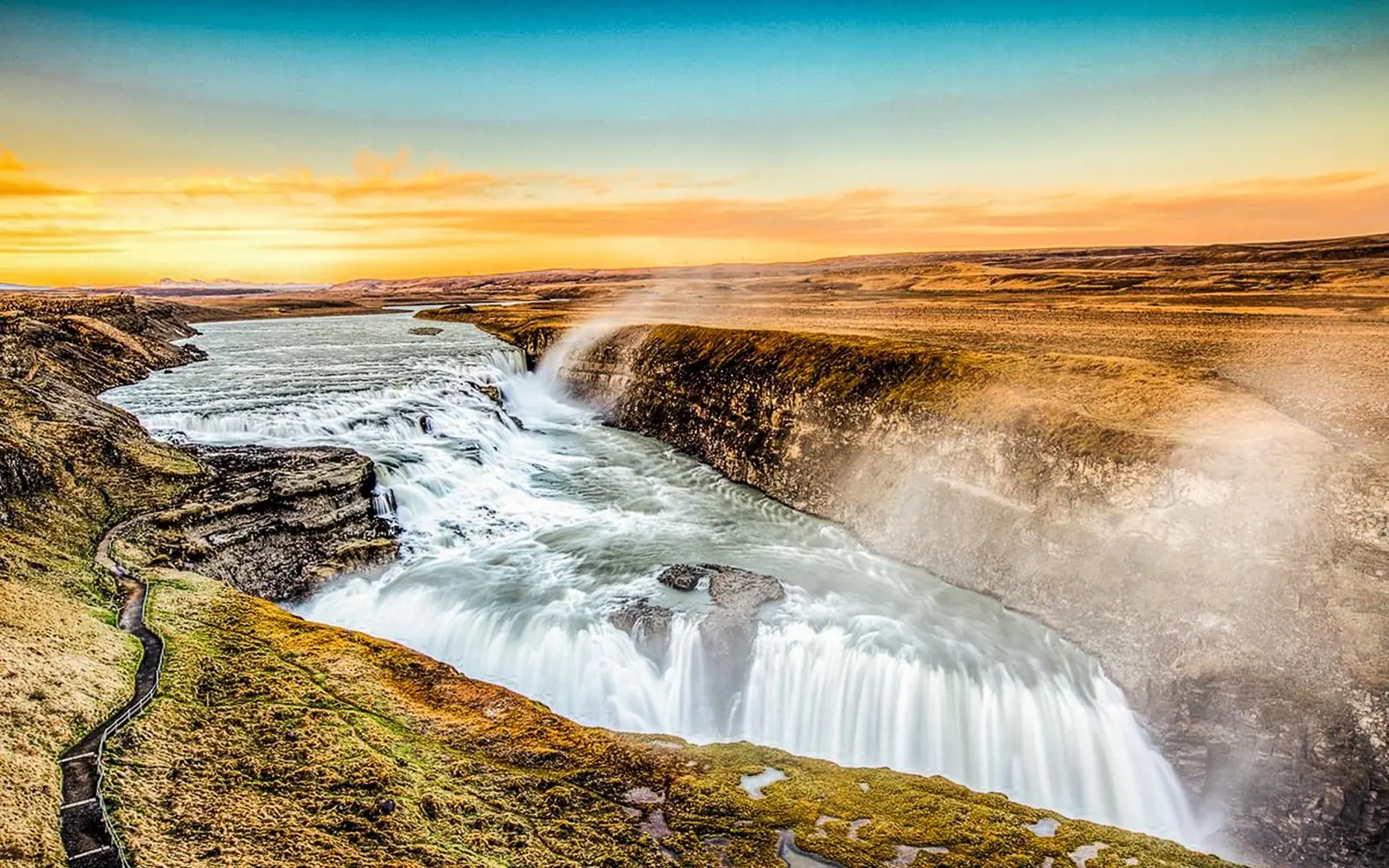
An Iceland Golden Circle tour gives you a full day of geothermal sights and tectonic drama. We compared 12 tours from $76 with free cancellation, and the top pick rates 4.8 from 27,200 reviews. Gullfoss drops 32 metres in 2 steps into a 2.5-kilometre canyon.
From, per person
12 trips compared$76
Today's lowest price across all 12 tours
Average rating
All 12 tours48
42,996 verified reviews across 12 tours
Your day
Shortest to longest25–11h
Shortest: Silfra Snorkelling
Longest: Golden Circle & Blue
Everything you can book here
Twelve trips out of Reykjavík, from a $76 seat on a coach to a three-day run down the south coast to the glacier lagoon. Between them they carry more than forty-two thousand reviews. Sorted by price, cheapest first — and the three headline stops are free to enter whichever one you pick.
★ 4.9 · 45 reviews
★ 4.8 · 27200 reviews
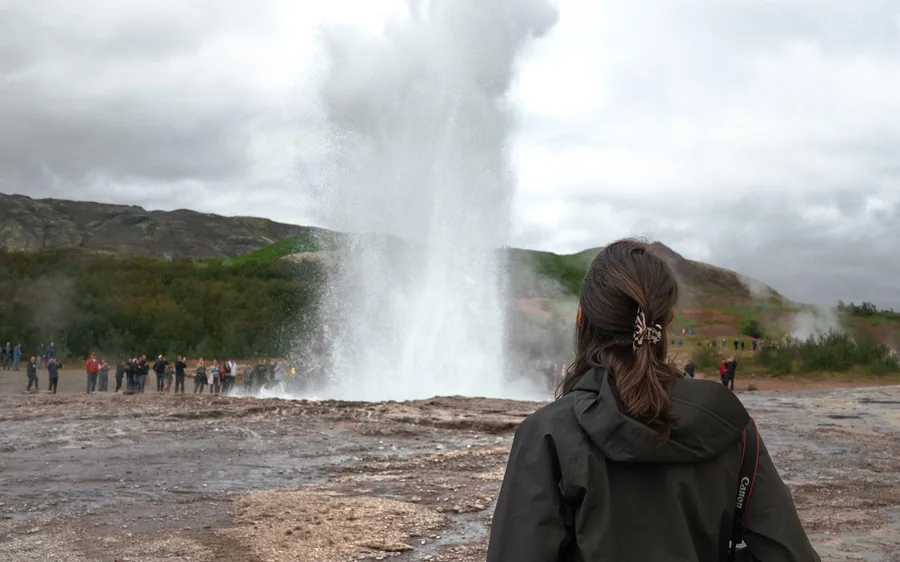
★ 4.7 · 205 reviews
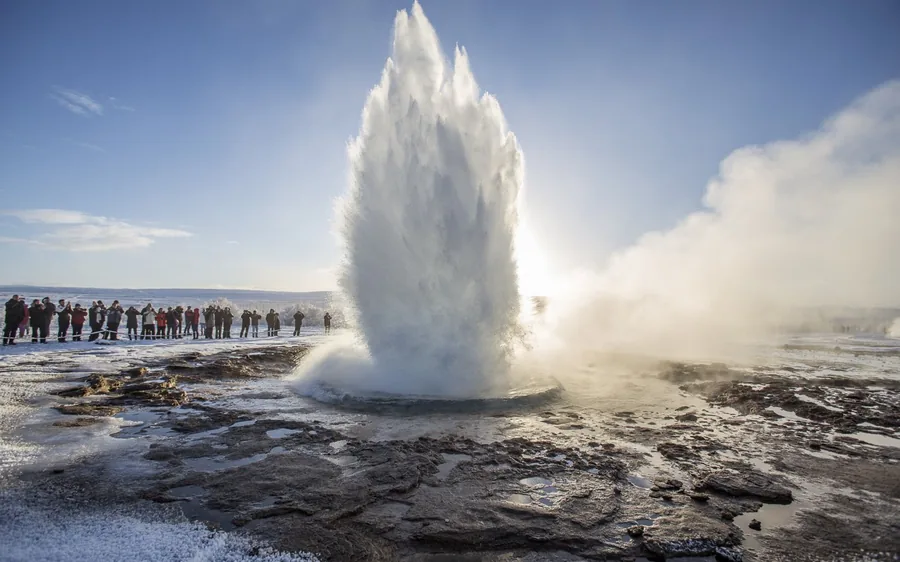
★ 4.7 · 212 reviews
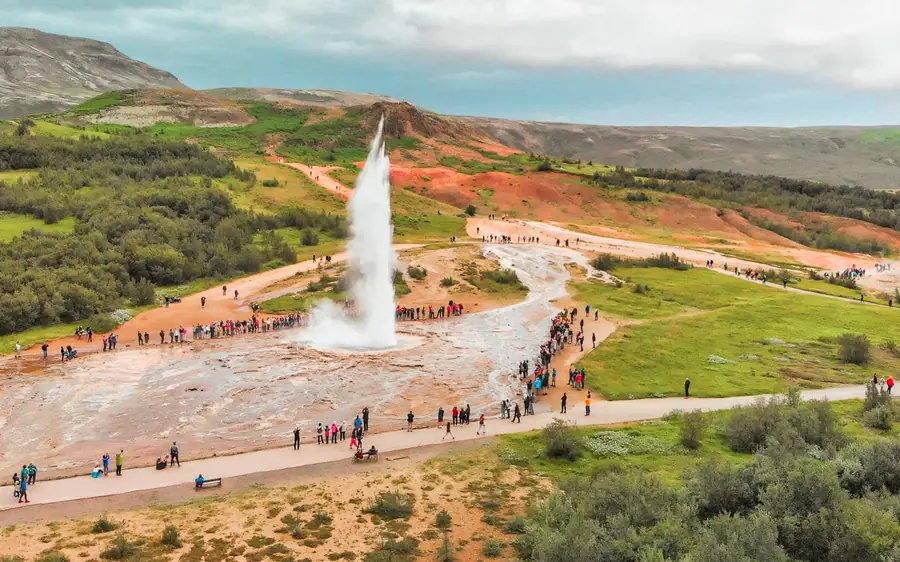
★ 4.8 · 801 reviews
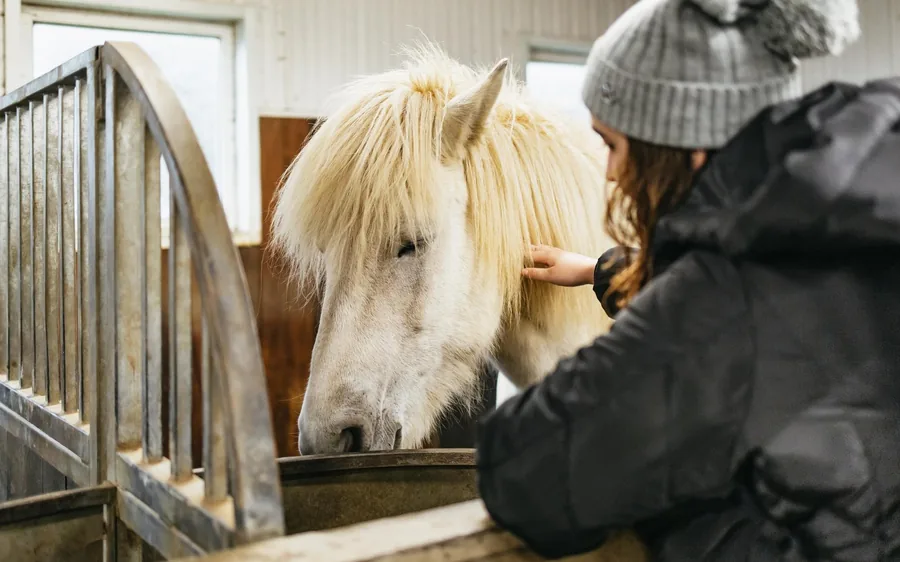
★ 4.8 · 557 reviews
★ 4.8 · 6446 reviews
★ 4.8 · 937 reviews
★ 4.6 · 319 reviews
★ 4.9 · 6006 reviews
★ 4.9 · 173 reviews
★ 4.7 · 95 reviews
Two questions
Twelve trips is too many and they mostly do the same three stops. The real question is what you want bolted on: nothing, a hot pool at the end, the Blue Lagoon, or three days that carry on down the south coast to a glacier lagoon. Pick that and we will point at one.
See it before you pay for it
The clips below are the route, not a promo reel. Þingvellir is a rift you walk down into, between the North American and Eurasian plates. At Geysir, Strokkur builds a blue dome of water and throws it fifteen to twenty metres up, every six to ten minutes, all day. And Gullfoss drops the Hvítá thirty-two metres in two steps into a canyon you cannot see the bottom of until you are standing over it.
Side by side
The Golden Circle is a public road with free car parks at the end of it, so the real question is not which tour but whether to take one at all. Driving it yourself costs a hire car and about 2,000 ISK in parking. A coach seat is $86 and you look out of a window for three and a half hours. A minibus is more, and it stops where a coach cannot.
Swipe the table sideways →
| Golden Circle Full-Day Classic | MOST BOOKEDGolden Circle & Secret Lagoon | Golden Circle & Blue Lagoon | |
|---|---|---|---|
| Price per person | $86 | $126 | $245 |
| Length of day | 7 – 8.5 hours | 10 hours | 11 hours |
| Cost per hour | $10.75 | $12.60 | $22.27 |
| The three main stops | Included | Included | Included |
| Added to the loop | Kerið crater | Kerið and the Secret Lagoon | Kerið and the Blue Lagoon |
| Ends in hot water | No | Yes | Yes |
| Hotel pickup | Yes | Yes | Yes |
| Rating | 4.8 · 27,200 | 4.8 · 6,446 | 4.9 · 6,006 |
| Best for | Doing it once, properly | Ending the day warm | Both big-ticket days at once |
| Check dates | Book this one→ | Check dates |
Free cancellation up to 24 h · Reserve now, pay later
Verdict
It does the three headline stops plus Kerið crater in a single day, and it carries more reviews than any other tour in Iceland — 27,200 of them at 4.8. In summer, with a hire car, drive the loop yourself instead: the road is public and every stop is free to walk into. In winter, in four hours of daylight and Icelandic wind, this is the sane answer.
Check dates and availability→Before you book
The Great Geysir — the one that gave every geyser on earth its name, and which appears in Icelandic records as far back as 1294 — has been dormant since 2003. In its day it threw water seventy metres up. It does nothing now. The geyser you will actually watch is Strokkur, a hundred metres away, and it fires every six to ten minutes to fifteen or twenty metres. Nobody selling you a ticket will mention this, and half the disappointment on this route comes from standing at the wrong hole in the ground.
Two-minute check
Twelve trips is too many and most of them do the same three stops. Three questions narrow it to one: how you want to travel, how long you have, and what you want bolted on to the loop.
How are you getting round?This decides more than the itinerary does
How much time have you got?The loop alone is a full day
What do you want added to the loop?The three big stops are on every tour
You’ll get the one that fits your answers, and the thing about it that catches people out.
Six ways round the loop
Ratings are the operators’ own numbers on GetYourGuide, shown as published. We do not write reviews and we do not average other people’s into a score of our own.
★★★★★
Based on 42,996
verified reviews
All twelve Golden Circle trips on this page, rated on GetYourGuide.
Read all 42,996→Golden Circle Full-Day Classic
From $86 · 27,200 reviews
★★★★★
Þingvellir, Geysir, Gullfoss and Kerið crater in a single day out of Reykjavík, rated 4.8 across 27,200 reviews. That is more feedback than any other tour in Iceland, and it is the reason this is the safe answer.
Driving it yourself
Car hire + about 2,000 ISK in parking
★★★★☆
Nobody charges admission at Þingvellir, Geysir or Gullfoss. Parking is 1,000 ISK at Þingvellir and about the same at Geysir; Gullfoss is free. Add Kerið and that is 700 ISK a head at the gate. Two hundred and thirty kilometres, about three and a half hours of driving.
Golden Circle & Secret Lagoon
From $126 · 6,446 reviews
★★★★★
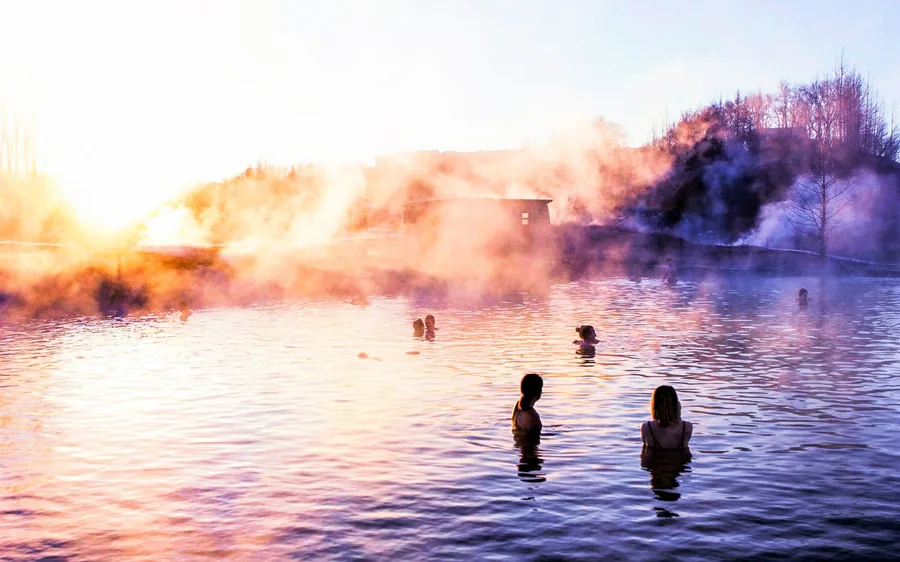
The same three stops plus Kerið, finishing in the Secret Lagoon — Iceland’s oldest swimming pool, built in 1891 and fed straight from the ground. Ten hours, and the last ninety minutes are the ones people describe afterwards.
Golden Circle & Blue Lagoon
From $245 · 6,006 reviews
★★★★★
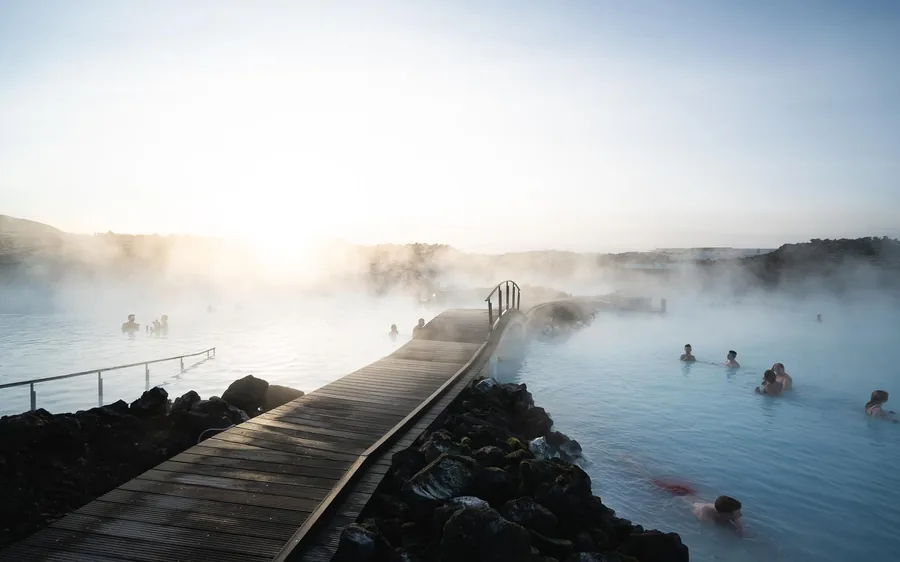
The Golden Circle and the Blue Lagoon in one eleven-hour day, with Kerið on the way round. Expensive, long, and it removes the single hardest bit of Iceland logistics — fitting the lagoon around a flight.
Langjökull Glacier Snowmobile
From $192 · meets at Gullfoss
★★★★☆
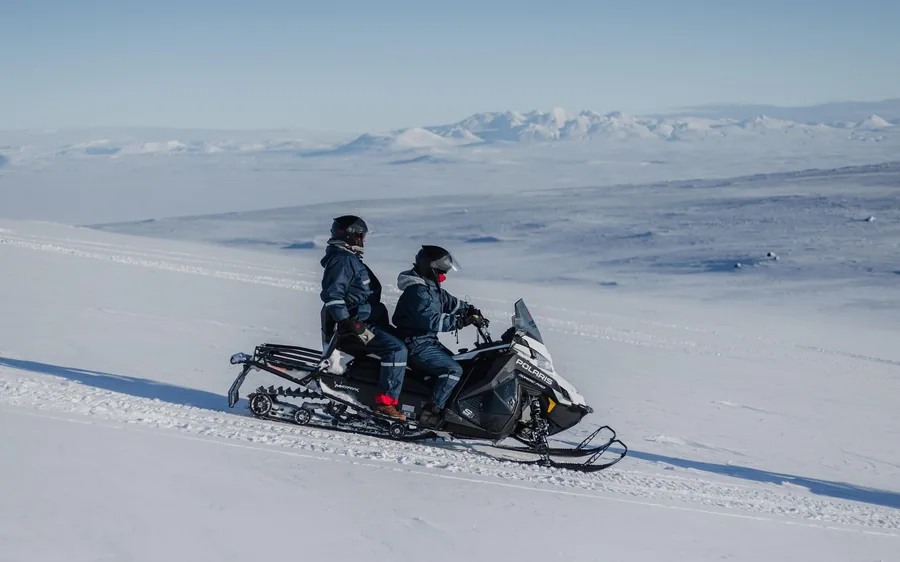
An hour on a snowmobile on Langjökull, Iceland’s second-largest ice cap, meeting at Gullfoss so it slots straight into the loop. Suits, boots and helmets supplied; you need a driving licence to steer.
3-Day Golden Circle & South Coast
From $868 · 3 days
★★★★★
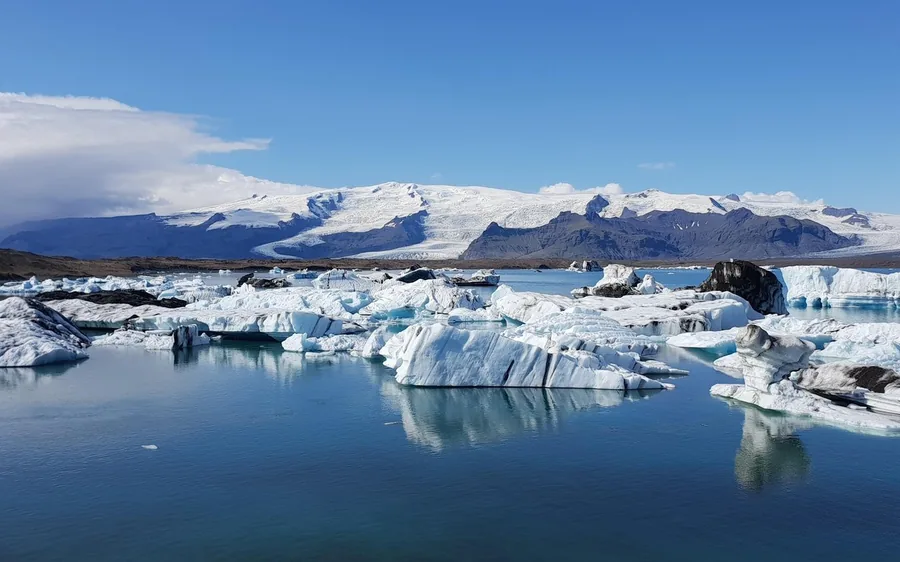
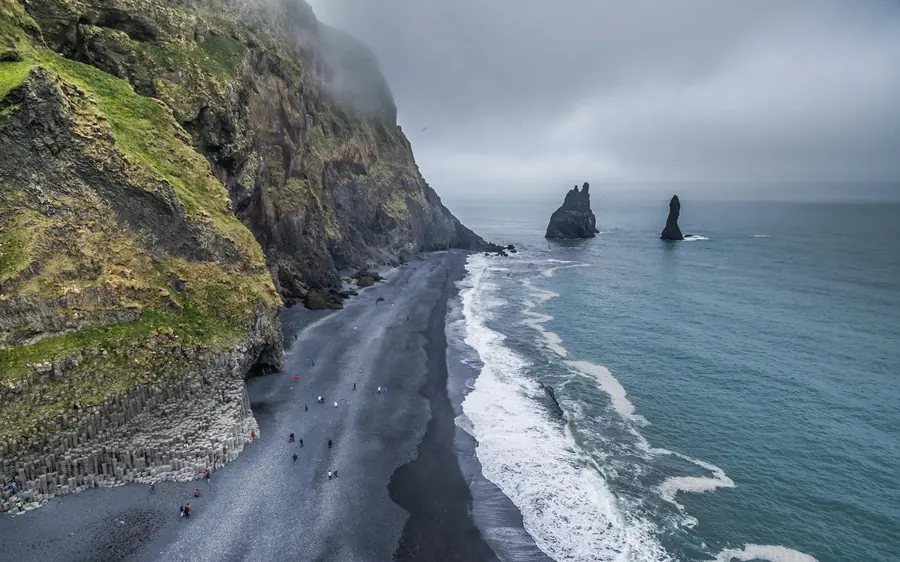
Three days that start with the Golden Circle and carry on down the south coast to Jökulsárlón, the glacier lagoon, with Reynisfjara and the big waterfalls on the way. Accommodation and a guide throughout.
What it really costs
Nobody charges you to walk into Þingvellir, stand at Strokkur or look over Gullfoss. What costs money is getting there and leaving the car — and if you add Kerið, that is a separate 700 ISK at the gate.
Swipe sideways →
| Stop | Entry | Parking | Note |
|---|---|---|---|
| Þingvellir National Park | Free to enter | Parking 1,000 ISK per car (1,200 ISK for 6–9 seats) | Valid all day, all main lots |
| Geysir geothermal area | Free to enter | Parking about 1,000 ISK per car | Pay at the machine or by plate |
| Gullfoss waterfall | Free to enter | Parking free | Two car parks, upper and lower |
| Kerið crater (optional stop) | 700 ISK per person | Parking free | Official rate, kerid.is |
The honest answer
It depends entirely on whether you are driving. The route is a loop of public road with free footpaths at every stop, so a tour is not buying you access — it is buying you a driver, a commentary and somebody else worrying about the wind. In Iceland, in winter, that is worth more than it sounds.
The loop, stop by stop
The base watches cloud base and wind on the névé, not rain in the village. A wet morning in town is often a workable morning up top, and a bright one can be grounded.
Boots, crampons, a jacket, overtrousers and a small pack, all supplied. Bring your own warm layer and a pair of thick socks. Allow the full hour; the fitting is not quick.
How to approach the machine, how to walk in crampons, and what to do if the weather turns while you are up there. Then the doors close.
Over the terminal face, over the grey rubble the glacier left behind, and up past the icefall. Short, loud and completely worth the ticket on its own.
It sets down on the névé, you get out, and it lifts off again. The noise goes with it and what is left is silence and a guide with an ice axe.
Crampons on, single file, following steps that were cut this morning. Blue tunnels, pressure ridges, moulins, and a route that will not exist next week.
The machine comes back to the same spot, or to another one if the ice has moved. Five minutes down, and you are peeling off crampons in the village by mid-afternoon.
Best time of day
The coaches leave Reykjavík between eight and nine and travel the loop as a group, anticlockwise, arriving at each stop within the same hour. If you are driving yourself that is the single most useful fact on this page: leave at seven and you will be at Þingvellir alone, or leave at two and take Gullfoss in the late light with the car parks emptying. In June there is daylight until midnight, so an afternoon start costs you nothing at all. In December it costs you the whole loop — and that is the month to let somebody else drive.
The four stops
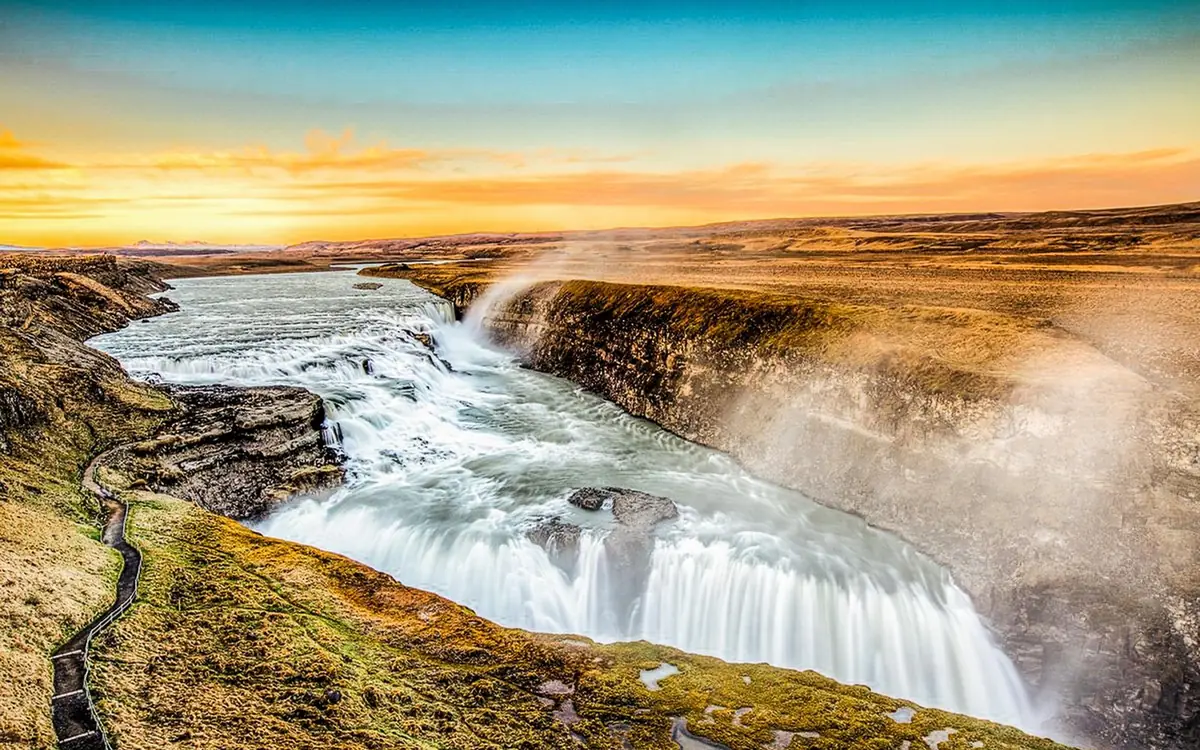
Two steps, eleven metres then twenty-one, into a canyon two and a half kilometres long.
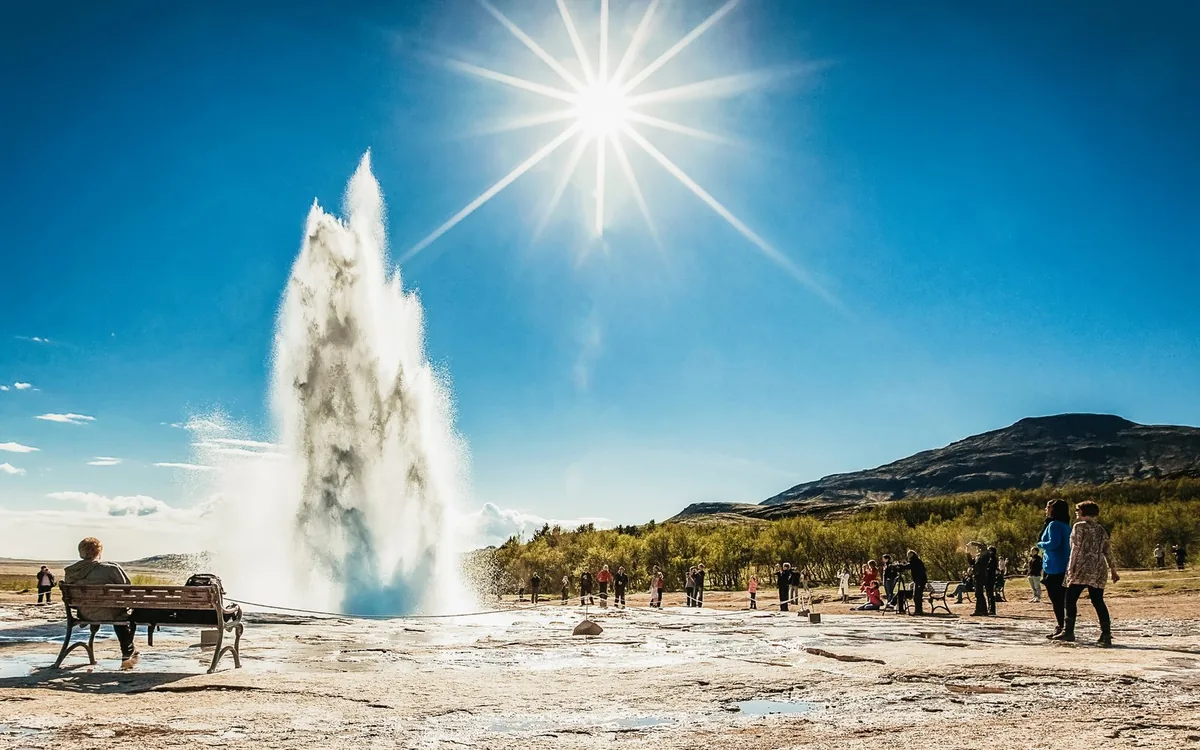
Every six to ten minutes. The blue dome that forms a second before is the photograph.
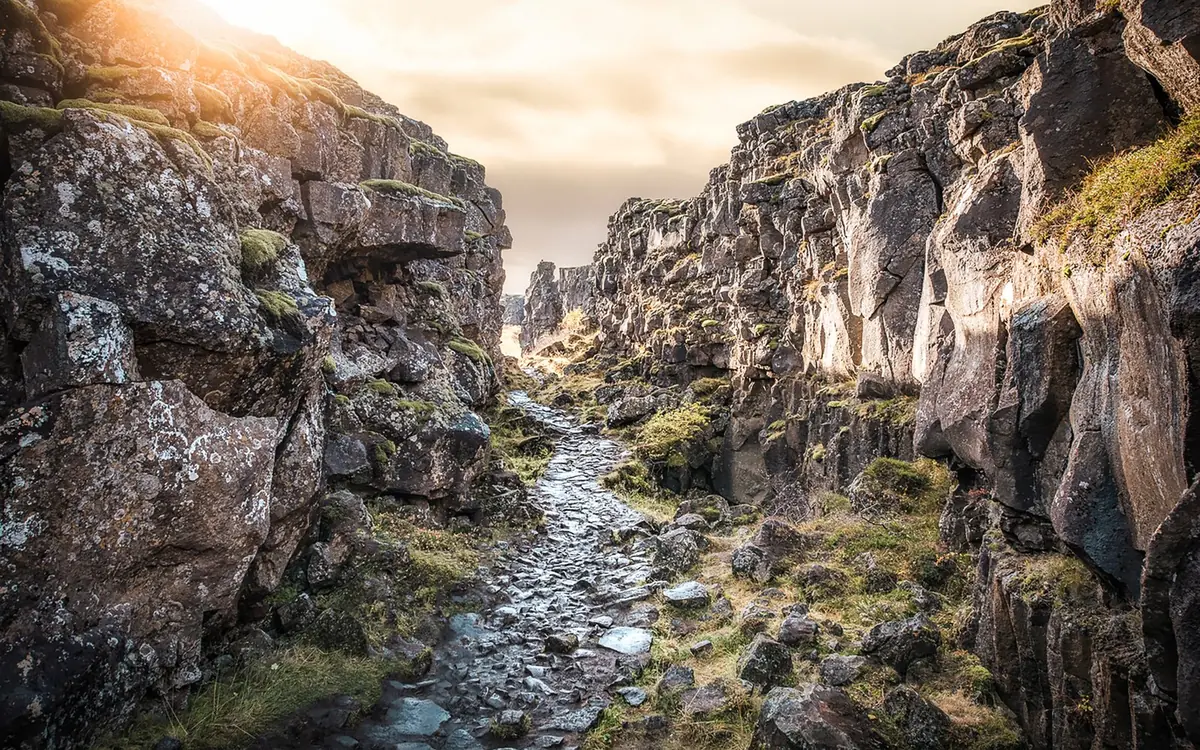
You walk down into the gap between two continental plates. It widens a couple of centimetres a year.
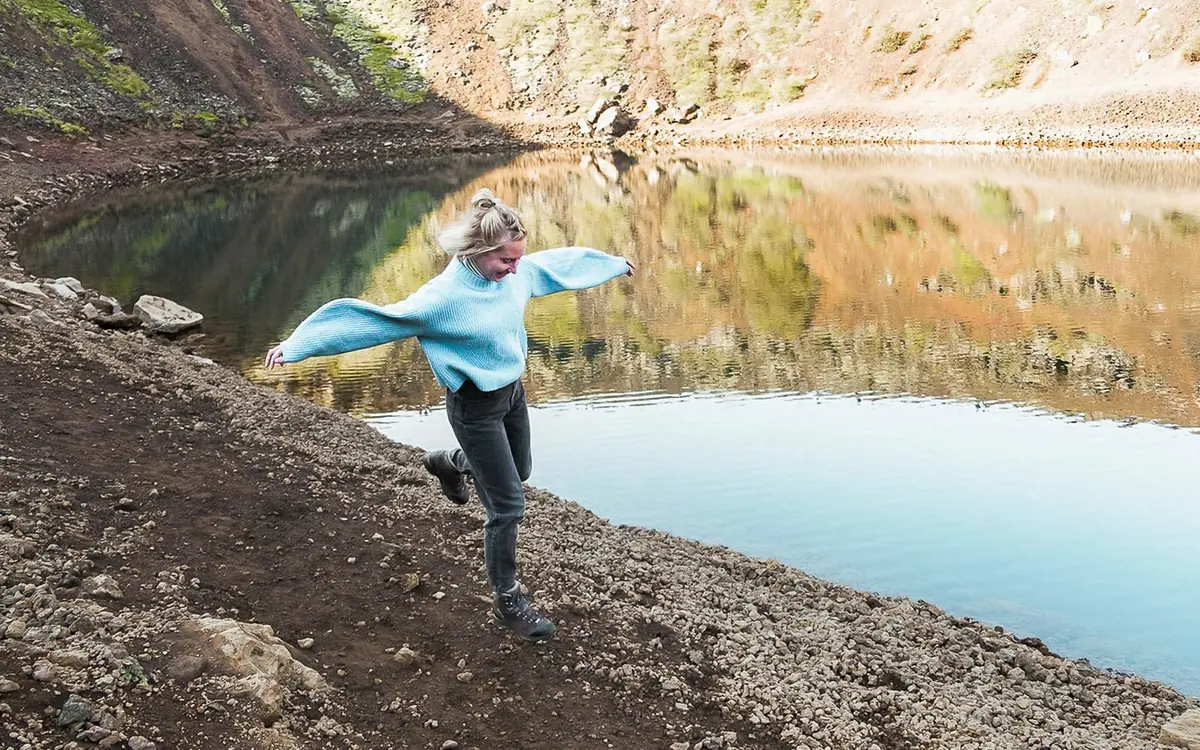
Two hundred and seventy metres across, fifty-five deep, and the only stop on the loop with a gate fee.
What it's like
The first thing to understand about the Golden Circle is that it is not an attraction. It is a loop of ordinary Icelandic road, about two hundred and thirty kilometres long, with three extraordinary things arranged along it and a name invented by the tourist board. There is no gate, no ticket and no opening time. You can drive it at two in the morning in June and the only thing stopping you is that you will want to sleep.
That matters because it changes what a tour is for. You are not buying access. You are buying a driver, a commentary and, in winter, somebody else deciding whether the wind is too strong to be on the road. In this country that last one is not a small thing.
Most tours go anticlockwise, which puts Þingvellir first. You come over a low rise and the whole rift valley opens out below: a lake, a plain, and a wall of rock running away to the north. The wall is the edge of the North American plate. On the far side of the plain, several kilometres away, is the edge of the Eurasian one. You walk down into the gap along a path called Almannagjá, between cliffs, and the gap widens by a couple of centimetres a year.
The Icelanders held their parliament here from the year 930, in the open, at the bottom of the rift. It ran on that spot for eight hundred and sixty years. Nobody built anything: they came, they argued at the Lögberg, and they went home. Standing in it, that arrangement makes more sense than it does written down.
Then Geysir, and a small disappointment that turns into a better story. The Great Geysir — the one that gave every geyser on earth its name, documented in Icelandic records since 1294 — is asleep. It last erupted in 2003. In its day it went up seventy metres.
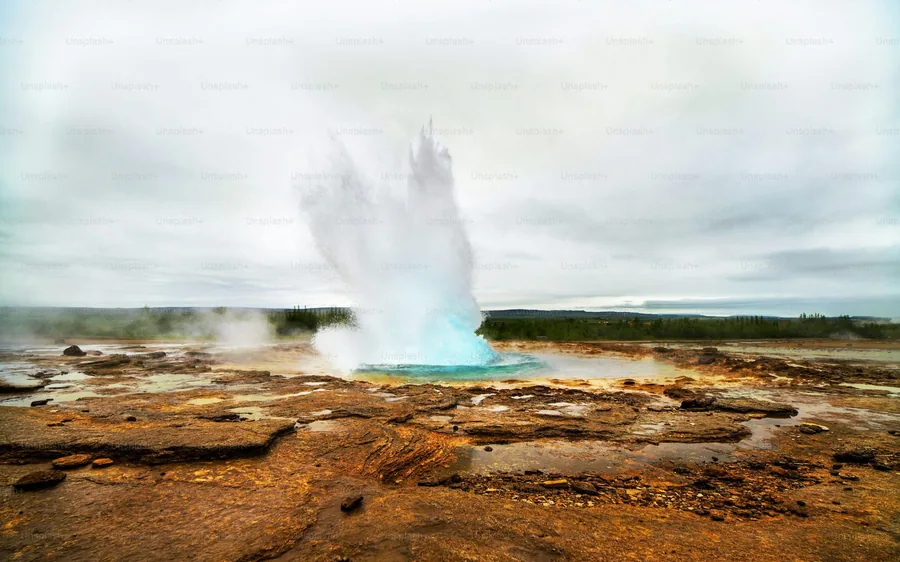
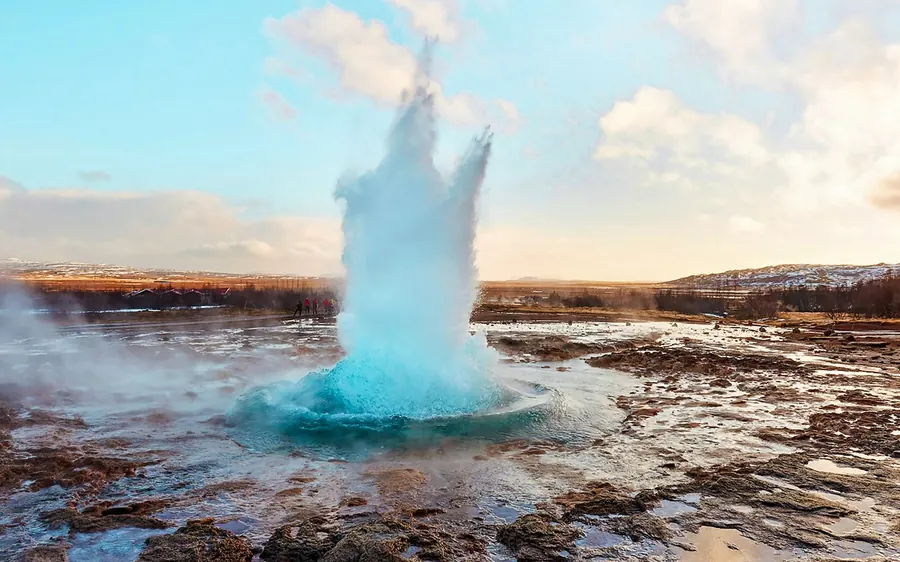
What actually performs is Strokkur, a hundred metres away, and it performs relentlessly: every six to ten minutes, fifteen to twenty metres, occasionally forty. The moment worth waiting for is not the column of water. It is the second before, when the pool bulges upward into a smooth blue dome the size of a car, and everybody standing around the rope inhales at once.
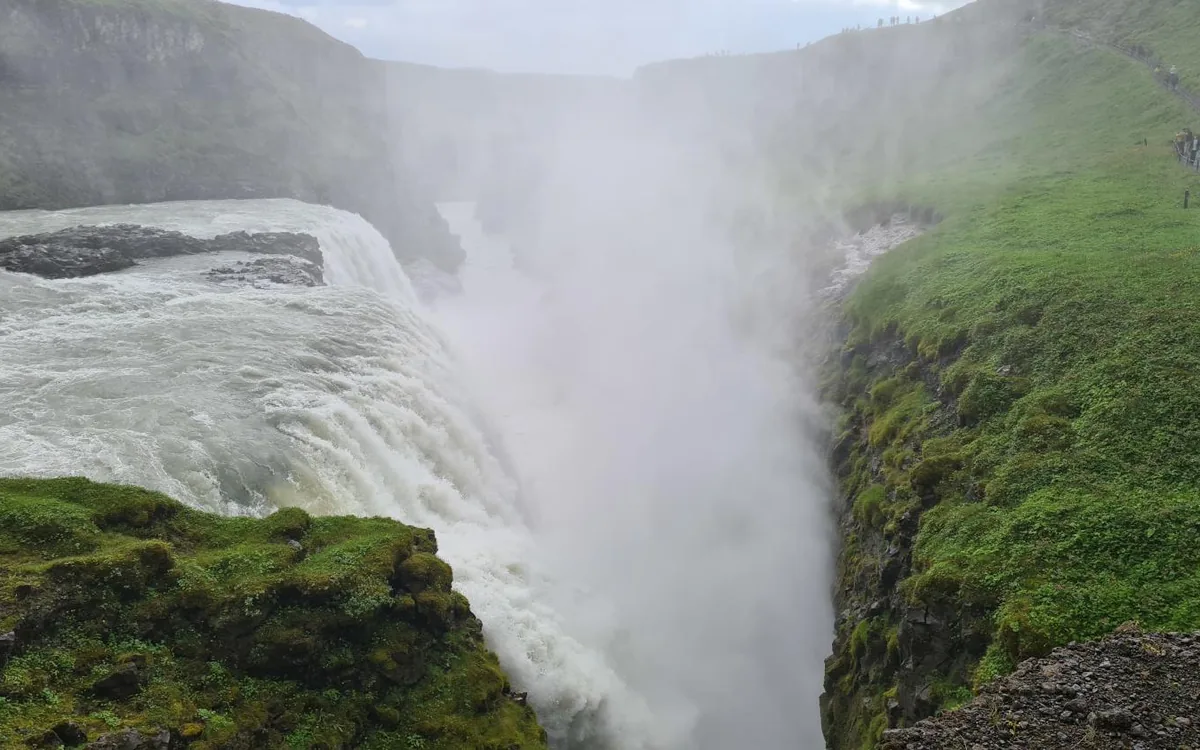
Gullfoss is the one that silences people. The Hvítá — the White River, full of glacial rock flour and coming off Langjökull — runs across a flat plain, drops eleven metres, turns ninety degrees, and drops another twenty-one straight into a crevice about twenty metres wide and two and a half kilometres long. In summer it does that at roughly a hundred and forty-one cubic metres a second. From the upper path you are looking down into a canyon whose bottom you cannot see for spray.
It nearly became a hydroelectric station. In the first half of the twentieth century foreign investors leased it, and Sigríður Tómasdóttir — daughter of the co-owner, who walked to Reykjavík barefoot to argue about it — is credited with stopping them. There is a stone with her face on it above the falls. Gullfoss has been permanently protected since 1979.
And then the fourth stop, which is where tours stop being interchangeable. Kerið, a two-hundred-and-seventy-metre red crater with green water in the bottom. Friðheimar, where they grow tomatoes under lights in a lava field and serve you soup among the vines. Brúarfoss, which is the bluest water in the country. Or a hot pool at the end — and after eight hours in Icelandic wind, that is the one nobody regrets.
While you're out that way
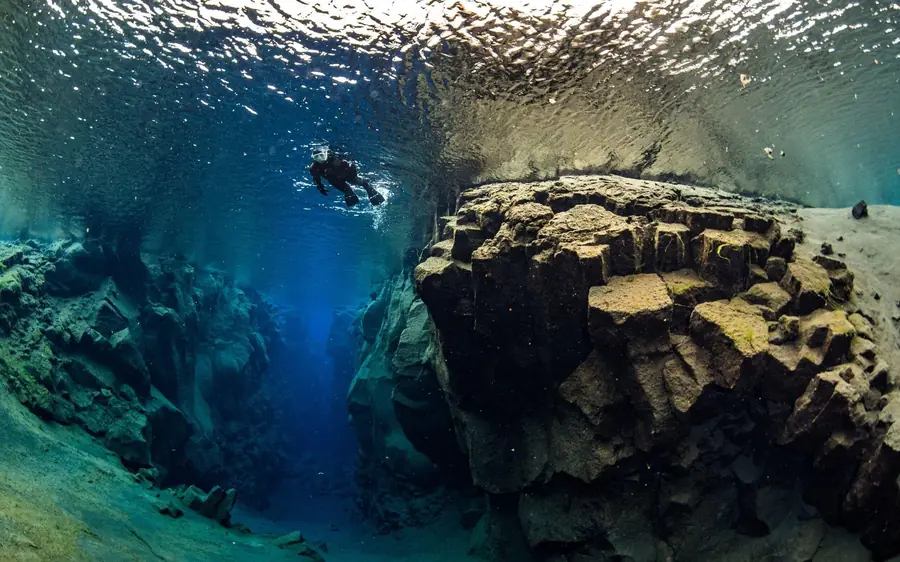
The loop takes eight hours and the three big stops take about ninety minutes of that. This is what people put in the rest of it: an hour on a snowmobile on Langjökull, a snorkel between two continental plates in water you can see a hundred metres through, and a soak in a pool that has been open since 1891.
Practical
Five things decide how it goes: which direction you go round, what time you leave Reykjavík, what the wind is doing, whether you have paid the parking, and how many extra stops you have talked yourself into.
A rift valley between two continental plates and the site of the Alþingi from 930. Free to enter; parking 1,000 ISK per car.
The Great Geysir is dormant since 2003. Strokkur beside it fires every 6–10 minutes, 15–20 metres. Free; parking about 1,000 ISK.
Two drops, 11 m then 21 m, into a canyon 2.5 km long. Free to enter and free to park — the only one of the three that is.
A 270-metre crater, 55 metres deep, with a lake in the bottom. 700 ISK per person at the gate, and worth it.
Tomatoes grown under lights in a lava field, and soup served among the vines. Booked separately or included on some tours.
A short walk off the loop to the bluest water on the route. Fewer people, and it needs its own half hour.
Roughly three and a half hours of driving with no stops, and six to eight hours as a real day.
Reykjavík to Þingvellir on 36, then 365 and 37 to Geysir, then 35 to Gullfoss and back down through Selfoss.
All of it is sealed road in summer. You do not need a 4x4 for the standard loop.
1,000 ISK at Þingvellir, about the same at Geysir, free at Gullfoss. Pay by plate at the machine.
Icelandic road closures in winter are usually about wind. Check road.is before you set off, every time.
There is fuel at Selfoss and at Geysir, but not much in between. Fill up in Reykjavík.
Most Reykjavík tours collect from hotels or from designated bus stops. Read which — it is not always your door.
Standard on every trip on this page.
A coach is cheaper and stops only at the big three. A minibus costs more and reaches Brúarfoss and the smaller stops.
The Blue Lagoon and Secret Lagoon combinations sell out first because the pools have their own capacity limits.
Some tours include the 700 ISK; some collect it on the bus. It is small, but it surprises people.
Operators drive this every day of the year. The tour going ahead is far more likely than you driving it yourself safely.
And they are the only ones for long stretches. Use them when you see them.
Both have cafés. Þingvellir has a visitor centre. Nothing is cheap; a packed lunch is normal here.
The temperature is rarely the problem. A windproof shell matters far more than a thick coat.
The ground is thin and the water is near boiling. This is the one genuine hazard on the route.
Four to six hours in December. A tour fits the loop into it; a self-drive often does not.
It is a national park and a World Heritage site, and permits are required.
Best time
The Golden Circle runs every day of the year and the roads are cleared as a priority. What changes month to month is the daylight you have to fit it into and what the waterfall is doing.
Jun – Aug
Up to twenty-one hours of daylight, every road open, Gullfoss at its fullest with the summer melt at around 141 cubic metres a second. Also the busiest: leave Reykjavík before eight or after two and you miss the coach convoy.
Sep – Oct
The best photographs of the year — low sun down the length of the Hvítá canyon, moss turning, and the crowds thinning fast. Daylight still comfortably enough for the loop.
Mar – May
Daylight climbing back past twelve hours, snow still on the highlands behind Gullfoss, and prices lower than summer. Roads can still ice overnight.
Nov – Feb
Four to six hours of usable light in December, so a full loop is tight if you self-drive. Gullfoss drops to about 80 cubic metres a second and can partly freeze, which is its own thing worth seeing. Wind, not snow, is what closes roads here.
Worth knowing
The three headline stops are free to enter. Nobody charges admission at Þingvellir, Geysir or Gullfoss. A tour buys you a driver and a commentary, not access.
Parking is the hidden cost. 1,000 ISK per car at Þingvellir (1,200 for 6–9 seats), about the same at Geysir, and free at Gullfoss. One Þingvellir payment covers all its car parks for the day.
The Great Geysir is asleep. It last erupted in 2003. The one that performs is Strokkur, a hundred metres away, every six to ten minutes. Half the disappointment on this route is people expecting the wrong geyser.
Kerið is the one stop with a gate fee — 700 ISK a head, and the official site says it is open “when the sun is shining”. Some tours include it, some collect it on the bus.
Go anticlockwise and go early. The coach convoy leaves Reykjavík between eight and nine and moves round together. Leave before them or after them and Gullfoss is a different place.
Wind closes roads here, not snow. Check road.is on the morning, every time, in any month from October to April.
Round out the trip
11 hours · ★ 4.9 (6006)
$245View 9 hours · ★ 4.8 (557)
$120View 3 days · ★ 4.7 (95)
$919ViewGo deeper
Common questions
A loop of about 230 kilometres east of Reykjavík linking three sites: Þingvellir National Park, the Geysir geothermal area and Gullfoss waterfall. It is a driving route rather than an attraction — there is no gate and no ticket, and all three stops are free to walk into.
About three and a half hours of pure driving, and six to eight hours as a real day with stops. Guided tours run seven to eight and a half hours for the classic loop, ten with a hot pool at the end and eleven with the Blue Lagoon.
From $76 for a seat on a coach doing the three main stops plus Kerið. The most-booked tour in the country is $86, small groups run from about $119, and the Blue Lagoon combination is $245.
The three headline stops are. Nobody charges admission at Þingvellir, Geysir or Gullfoss. What costs money is parking — 1,000 ISK per car at Þingvellir and about the same at Geysir, with Gullfoss free — and Kerið crater, which is 700 ISK per person at the gate.
Yes, and plenty of people do. It is all sealed road and a two-wheel-drive car is enough in summer. In winter the daylight is four to six hours and wind closes roads at short notice, which is when a tour starts making sense.
The Great Geysir has been dormant since 2003. The one that erupts is Strokkur, a hundred metres away, which fires every six to ten minutes to about fifteen or twenty metres. Half the disappointment on this route comes from expecting the wrong geyser.
Yes, for almost everybody, and it is the single most common first day out of Reykjavík for good reason. Whether the guided version is worth it depends on the season: in summer with a hire car, drive it. In winter, in four hours of light and Icelandic wind, take the tour.
Free · no account needed
One PDF: the loop hour by hour with every car park and what it costs, the two stops worth adding, and where to go on days two and three. Built from official sources and the same live listings as this page.
The plan is on its way. If it isn't there in a minute, look in Promotions.
Why trust this page
Fees come from the official sources — kerid.is for the crater, the national park for Þingvellir parking. Waterfall and geyser figures come from published measurements. Prices and ratings are read off the live listings.
Twelve trips are on this page, from a coach seat to a three-day run down the south coast, and the free self-drive option is compared against all of them. Nobody pays to be featured.
The three headline stops cost nothing to enter. Most sites in this niche will not tell you that, because they are selling the tour. We lead with it.
The Great Geysir has been dormant since 2003. We say so on every page it belongs on rather than letting people find out at the rope.
The answer
If you have a hire car and a summer day, leave Reykjavík at seven and do it yourself — the road is free, the stops are free, and you will have Gullfoss to yourself. If it is winter, or you have no car, take the classic full-day tour at $86: the same three stops plus Kerið, and 27,200 reviews at 4.8 behind it.
Check dates and availability→ Free cancellation up to 24 hours · Reserve now, pay laterBefore you go
The loop hour by hour with every car park and what it costs, the two stops worth adding, and where to go on days two and three.
Check your inbox in a minute.
or
Just show me live dates and prices →
3-Day Golden Circle & South Coast
★ 4.9 · 173 reviews · Free cancellation 24 h